
Chiropractor, Physiotherapist or Osteopathic Manual Practitioner: Which One Do You Need?
Something hurts and you want it looked at. Then you see three job titles you can't tell apart, and you're not sure which one you're supposed to need.
A Physiotherapist focuses on how you move + rebuilds strength through exercise. A Chiropractor works with the spine, joints + soft tissue, using hands-on treatment alongside movement work. An Osteopathic Manual Practitioner takes a whole-body approach through gentle soft tissue + joint work. There is plenty of overlap between all three, and for most everyday aches, more than one of them may be able to help.
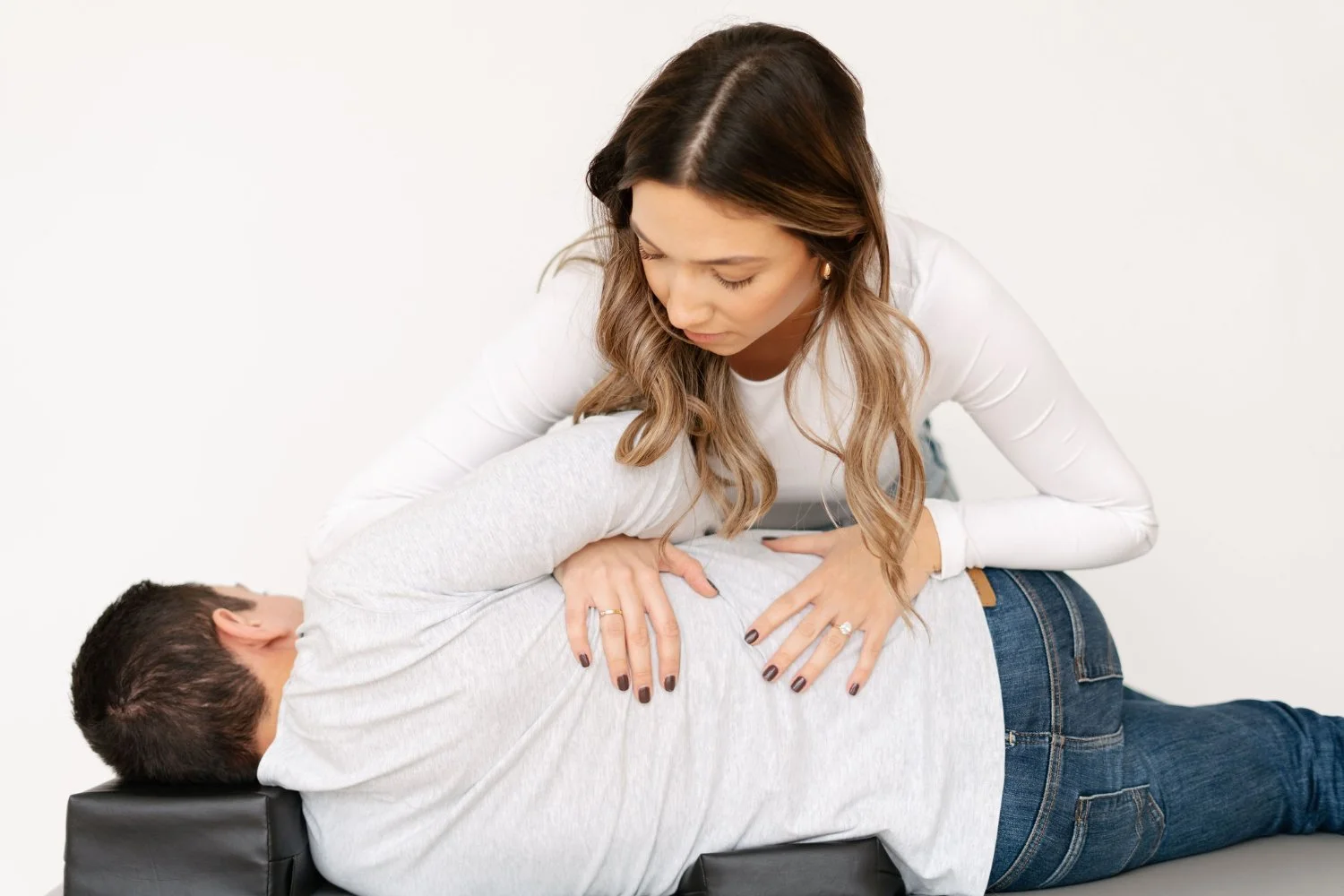
All Three Under One Roof
We have Chiropractors, Physiotherapists, and an Osteopathic Manual Practitioner offering care, all under one roof. Helping you find the right service and practitioner fit is an important part of the care we provide!
What a Physiotherapist Does
Physiotherapists are regulated in Ontario by the College of Physiotherapists of Ontario. Training is a university degree, a Master of Physical Therapy.
The work is movement-focused. Your Physiotherapist will assess your strength, mobility + movement patterns, and your appointment can include hands-on treatment, soft tissue therapy, exercise-based rehab, education and supportive modalities as needed. Sessions are one-on-one and tailored to your body + goals, and you'll leave with exercises to carry the work forward at home.
People often come to Physiotherapy after an injury or a surgery, or when something has been bothering you for months. It also supports growing bodies + sports injuries in kids and teens, pregnancy and birth prep, postpartum recovery and more. Pelvic Floor Therapy is its own area within this, covering bladder, bowel, core + pelvic health.
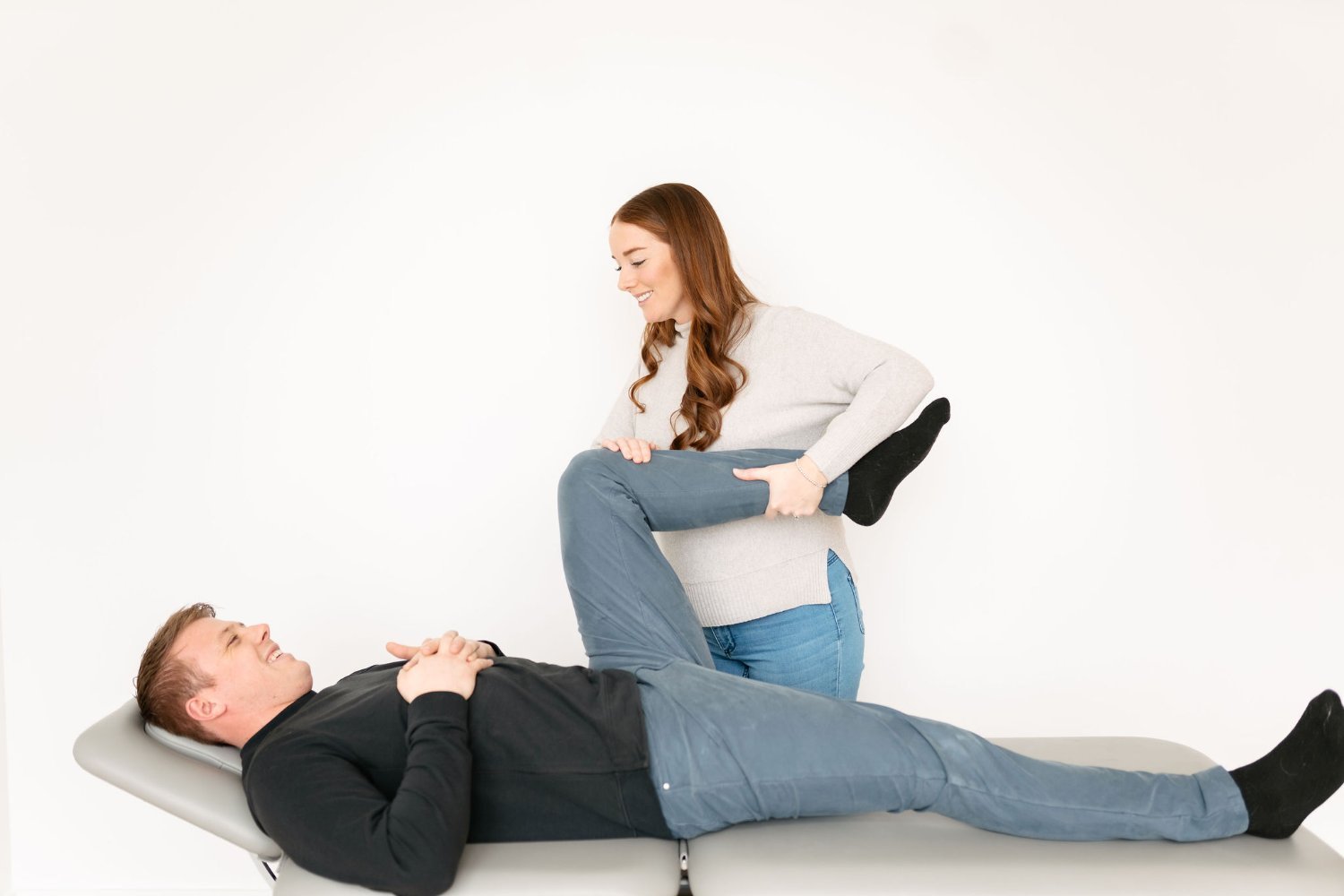
What a Chiropractor Does
Chiropractors are regulated in Ontario by the College of Chiropractors of Ontario, and the training is a four-year doctorate after an undergraduate degree. Chiropractors are trained to assess and diagnose, and they can refer you for x-rays when that's appropriate.
The adjustment, that quick and specific movement applied to a joint, is the technique people picture. It's one option among several rather than the whole of Chiropractic Care, and how much a Chiropractor uses it varies a lot.
At Twh, Chiropractic Care is movement-based. Your Chiropractor will assess posture, joint mobility + movement patterns, and your care can include soft tissue therapy like Active Release Technique, rehabilitation exercises, Acupuncture or modalities [ifc, tens, ultrasound, cupping]. Appointments are one-on-one, and adjustments are used when they suit you + your goals, never as a default.
Care also isn't limited to the spine. Shoulders, elbows, wrists, hips, knees + ankles are all treated here. People come for back + neck pain, postural strain, headaches, joint pain, and through pregnancy + postpartum. We see your little one[s] too, with gentle care that supports growing bodies through infancy, childhood and early development.
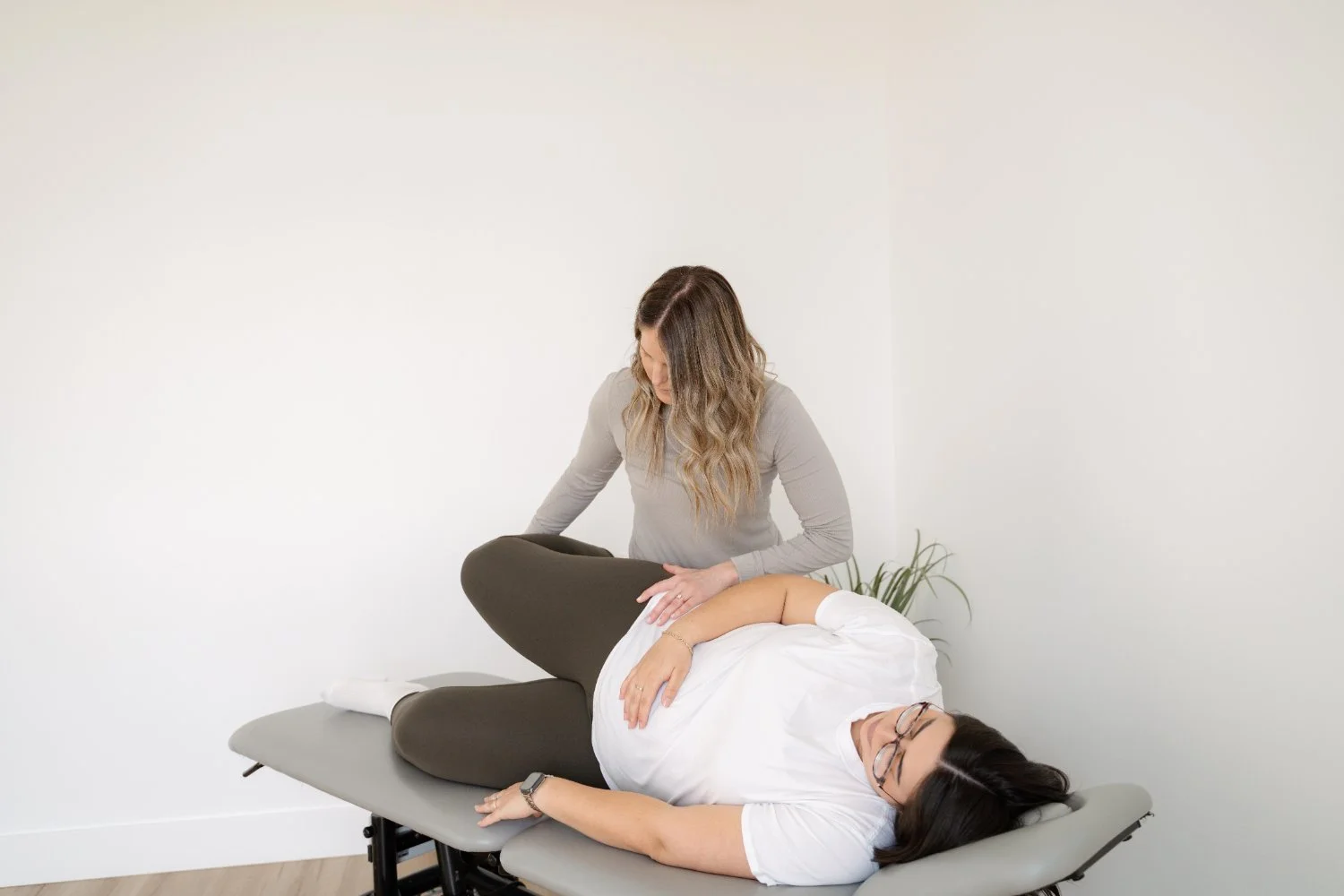
What an Osteopathic Manual Practitioner Does
In Ontario, Osteopathy is not a regulated health profession, and the formal title is Osteopathic Manual Practitioner. Training is through private colleges, and it's different from a physician with a DO qualification in the United States.
Osteopathy is a type of manual therapy that works with your body's natural self-healing and self-regulating processes. Your Osteopathic Manual Practitioner looks at the body as a whole rather than only where symptoms show up, assessing how muscles, fascia, bones, tendons, ligaments + surrounding tissues may be contributing to restrictions or symptoms. Treatment often includes techniques such as myofascial release, with the goal of improving mobility and easing restrictions throughout the body, and everything is guided by your comfort and consent.
People come to Osteopathy for everyday aches, mobility concerns, postural strain, recovery from injury and more, along with tension or pain that's either new or ongoing. It supports pregnancy + postpartum, stress and nervous system regulation, and more.
Osteopathy is the newest of the three to be studied, so there's less research behind it so far. What we can tell you is that plenty of our patients find it's the approach that suits them. It's also now recognized by many major insurance companies, and we always recommend checking your individual benefits and coverage with your provider before booking.
The Comparison, Side by Side
| Category | Physiotherapist | Chiropractor | OsteopathOsteopathic Manual Practitioner |
|---|---|---|---|
| Regulated in Ontario | Yes, CPO | Yes, CCO | No, not currently regulated |
| Training | University degree, usually a master's | Four-year doctorate | Private college training |
| Main approach | Movement-focused, with hands-on treatment + exercise | Spine, joints + soft tissue, with movement work | Whole-body hands-on work |
| A typical session | One-on-one, assessment, hands-on work + exercises to take home | One-on-one, hands-on + movement work, exercises to take home | One-on-one, gentle hands-on work |
| Insurance | Commonly covered, check your plan | Commonly covered, check your plan | Recognized by many major insurers, check your plan |
Where to Start, By What's Going On
None of this replaces an assessment and none of it is a diagnosis, so please treat it as a gentle place to begin.
When to see a doctor first: if back pain follows a fall or an accident, comes with numbness in the groin or inner thighs, changes your bladder or bowel control, or arrives with a fever or unexplained weight loss, please have it looked at medically, and soon. The same goes for a sudden severe headache, chest pain, or weakness down one side.
New back pain with no obvious cause: guidelines agree on staying active rather than resting, and on holding off on scans early on, so any of the three can help here.
Pain that's been around for months: an exercise component matters more the longer things have been going on, and since Physiotherapy is built around that and our Chiropractic Care includes it too, either is a good place to start.
Pregnancy or postpartum aches: Pelvic Floor Physiotherapy is the more specific route for bladder symptoms or recovery after birth, and Chiropractic Care + Osteopathy can both support the aches that come with a changing body. Gentle hands-on care suits a lot of mamas here.
A sports injury or something post-surgical: rebuilding strength is usually what's needed, which points toward Physiotherapy.
Headaches: whether it's tension headaches, cervicogenic headaches, migraines or another type, hands-on care can help. Manual therapy is used across Physiotherapy, Chiropractic Care + Osteopathy, and your Physiotherapist or Chiropractor can add Acupuncture alongside it. Headaches can have so many different causes, so we also recommend Naturopathic care for headache assessments to help find the root of what's contributing.
You'd prefer nothing forceful: please tell us! Our treatments can be gentle - even with deep pressure if thats your preference!
Do You Have to Get It Right First Time?
No, you don’t! Ontario doesn't require a referral for any of the three, so you can book with whoever you like. If it turns out you've booked the wrong one, your practitioner will tell you and point you to the right person here or another local practitioner.
You booked with the clinic and not only with the practitioner, so getting you to the right person is part of the care.
There's research behind combining approaches for pain that's been around a while, too. A Cochrane review published in the BMJ found multidisciplinary rehabilitation, which pairs physical treatment with psychological or work-focused support, did better than usual care for chronic low back pain.
At Twh, our team collaborates across disciplines, so your care is always shaped around what's right for you.
How We'd Suggest You Decide
Book a complimentary consultation with whichever of the three makes the most sense to you, tell them everything you've noticed, and let the practitioner guide you to the right service!
If you want a hand narrowing it down first, get in touch with your Client Experience Team and tell us what's going on. We'll point you toward the right person, even if that isn't us. Take the next step when it feels right for you.
FAQ
How do I know if I need a Physio or a Chiropractor?
If your goal is rebuilding strength or getting back to a sport or an activity you love, Physiotherapy is built around exactly that. If it's stiffness, joint pain or headaches you'd like looked at hands-on, that's closer to what our Chiropractors do day to day. The overlap is wide, so either can be a good first appointment, and you won't be stuck with the choice.
Is it covered by insurance?
Chiropractic Care and Physiotherapy are commonly covered by extended health plans, usually with a separate yearly cap for each. Osteopathy is now recognized by many major insurance companies as well. We always recommend checking your individual benefits and coverage with your provider before booking.
What's the difference between an Osteopath in Ontario and a DO?
In Ontario, an Osteopath's formal title is Osteopathic Manual Practitioner, and they're trained in hands-on osteopathic technique through a private college. It is not a regulated health profession here. In the United States, a DO is a Doctor of Osteopathic Medicine, a licensed physician with full medical training. They are different things with similar-sounding names.
Do you treat babies and children?
Yes. Our Chiropractors and our Osteopath both see little one[s], and our Physiotherapists work with kids and teens too, supporting growing bodies, sports injuries and movement development. Care at that age looks quite different from care for an adult. It uses gentle techniques adapted to their age and stage, a parent stays with them throughout, and nothing goes ahead unless you're comfortable with it.